ServicesWhole-Home Filtration
Whole-Home Filtration in Port Washington
We install a carbon filtration system on your main water line, so every faucet, shower and appliance gets water without the chlorine taste or bleach odor. Drop cloths cover the floors while we work, and the mechanical room is swept and tidy before we pack up.
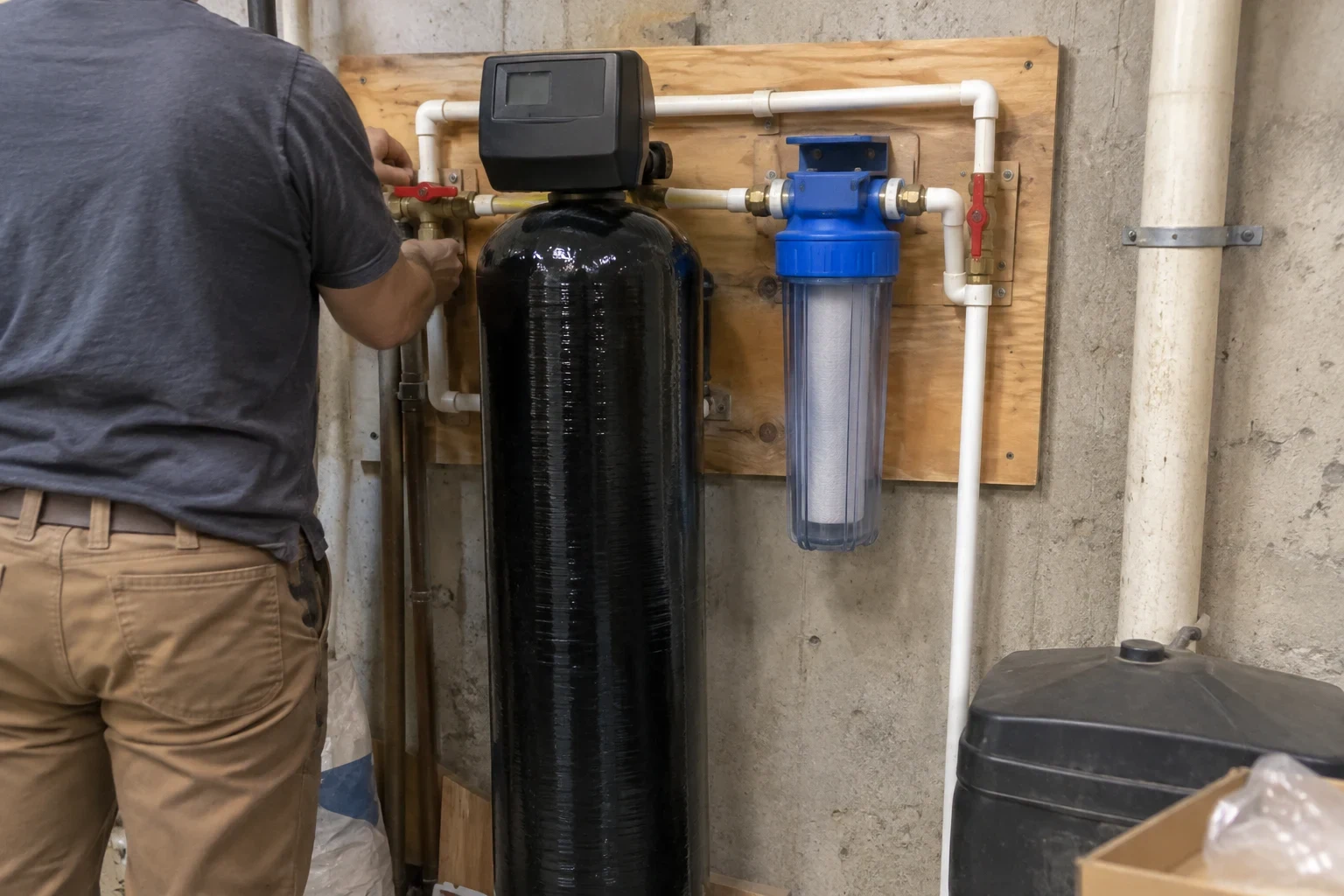
How point-of-entry filtration works, and who it suits
The equipment goes on your main line where it enters the house, usually just downstream of the meter and main shutoff. Incoming water passes first through a cartridge that catches sediment, then through a bed of carbon media, and only after that does it branch off to the water heater and the fixtures. Chlorine and chloramine bind to the carbon surface, which is why the bleach odor in a steamy shower goes away.
It makes sense when the taste, odor or grit shows up at every tap, not only in the kitchen. If drinking water is your only concern, an under-sink reverse osmosis unit does more for that one faucet and costs less. Carbon also does nothing for scale on fixtures; that job belongs to a water softener. And if your home draws from a private well, the problems are different, so see our well water treatment page.
What the installation includes
Sediment prefilter
A cartridge housing mounted before the carbon tank traps sand and loose pipe scale. Keeping grit out of the carbon bed prevents channeling and lets the media last longer.
Carbon tank sized to your flow
Tank size follows your bathroom count, so water stays in contact with the media long enough to be treated. A tank that is too small lets chlorine pass when a shower, a second shower and the dishwasher all draw at once. If your supply is disinfected with chloramine, we specify catalytic carbon, since ordinary granular carbon removes it slowly and poorly.
Bypass valve and shutoffs
Three valves arranged as a bypass let you route water past the tanks during a cartridge change while the rest of the house keeps running. We use full-port ball valves to hold pressure loss down.
Grounding jumper
Opening up a copper main can interrupt the electrical ground that runs through your plumbing. A bonding jumper clamped across the new section keeps that ground continuous.
Drain line with an air gap
A backwashing tank flushes to a floor drain or standpipe. The line ends with a proper air gap, so wastewater has no route back into your supply.
Floor protection and cleanup
We lay drop cloths from the entry to the work area and put on shoe covers before stepping inside. Boxes, pipe offcuts and old fittings go out with us.
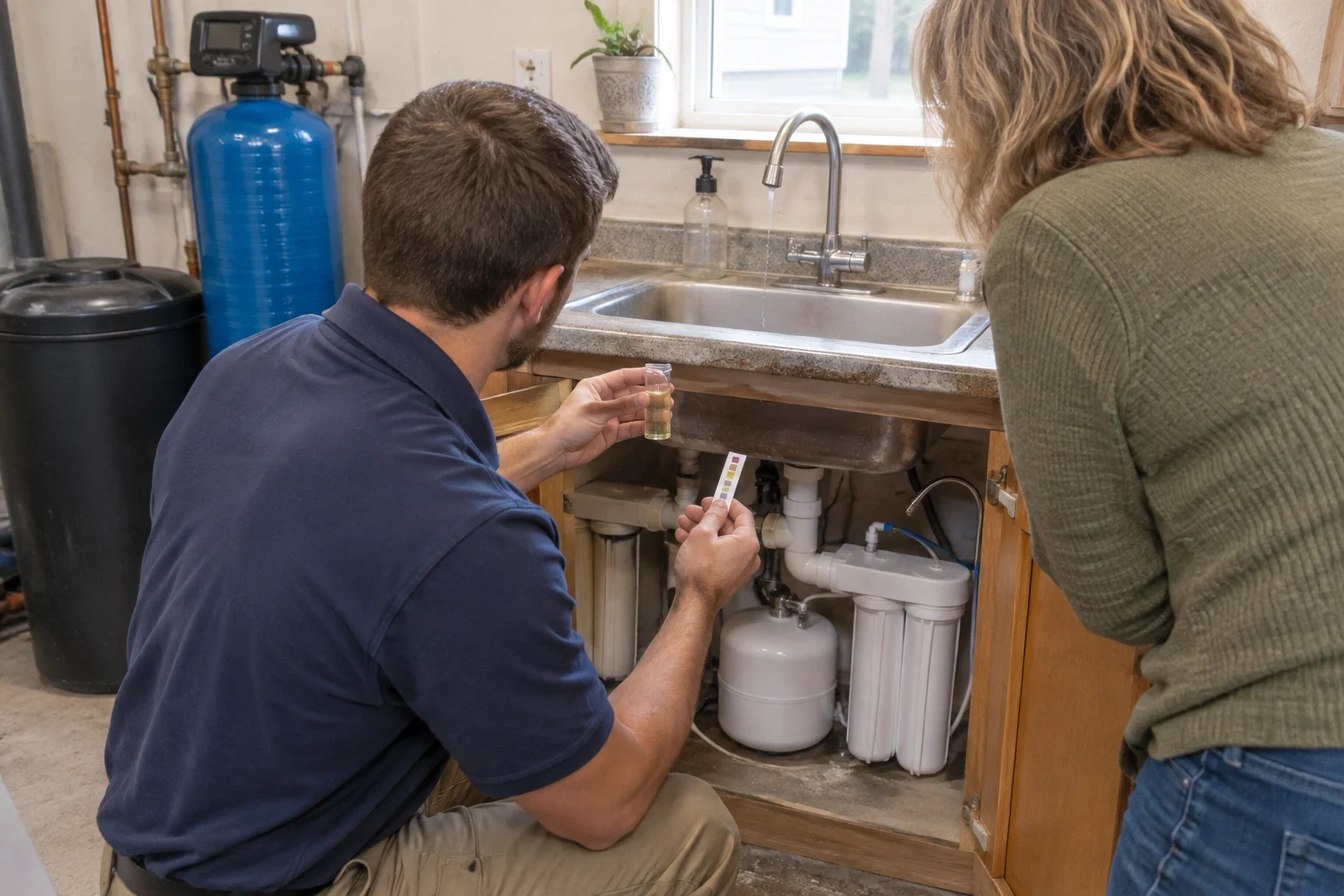
Signs your whole house needs filtration
- Chlorine smell in the shower
- Hot water releases chlorine as vapor, and a bathroom with the door shut holds onto it. A filter at the kitchen sink does nothing for that room.
- Dry skin and brittle hair
- Plenty of people feel tight, dry skin after a shower in chlorinated water. Treating water where it enters the house covers every bathroom at once.
- Grit in aerators
- Fine sediment builds up in faucet screens and in the inlet valves on your washer and dishwasher. A prefilter catches it upstream.
- Hardened rubber seals
- Over time chlorine stiffens toilet flappers and washing machine hoses. With it removed, those rubber parts hold up longer.
- A filter for every faucet
- Buying separate cartridges for the fridge, a shower head and a pitcher adds up. One point-of-entry system can take the place of all of them.
How install day runs
- 1
Walk-through and layout
We look at your main line, the space near the meter and the nearest drain. Then we show you where the tanks will sit and how the pipe will route, before anything is cut.
- 2
Protect the work area
Drop cloths go down along the path and under the tanks. Furnace, water heater and stored items near the line get covered.
- 3
Plumb, bond and fill
The licensed plumber shuts off the main, cuts in the bypass and connects the prefilter and carbon tank. The ground jumper goes on, and the tank is filled and flushed slowly to clear carbon fines.
- 4
Pressure check and cleanup
We open the house back up, check every joint for weeps and confirm pressure at a few fixtures. Then we vacuum, wipe down the tanks and haul away every scrap.
- 5
Walk you through upkeep
You will see how to use the bypass and change the prefilter cartridge, and you will know roughly when the carbon will need replacing.
What moves the price of a whole-home system
Your quote reflects the equipment your home needs and the plumbing it takes to fit it in. We go over each line item with you, and the number holds for 30 days. Financing is available through U.S. Bank Avvance, on approved credit, if spreading the cost out suits your budget better. Nothing is due up front; full payment comes at the completion of the install.
- Tank size and media type
- A house with more bathrooms needs a bigger carbon bed to keep contact time up. Catalytic carbon, used where the supply is treated with chloramine, is priced higher than standard granular carbon.
- Backwashing or upflow design
- A backwashing control valve keeps the media working longer, but it needs a drain and a power outlet nearby. An upflow tank skips both and gets replaced sooner.
- Pipe material and access
- Copper, PEX and older galvanized lines each call for different fittings. A main buried behind finished drywall takes more labor than one running across an open basement wall.
- Adding other equipment
- If you add a softener or an under-sink reverse osmosis unit on the same visit, both jobs share the work of opening the main line once.
Whole-home filtration questions
- Will filtering the whole house cut my water pressure?
- With a tank sized to your flow, most people never notice a difference. When pressure does drop, the usual cause is an undersized tank or a sediment cartridge that has clogged with grit. We match the system to your fixture count and use full-port valves so nothing narrows the water path.
- How often do the filters need changing?
- Plan on a new sediment cartridge every few months, sooner if your water carries a lot of grit. The carbon bed itself lasts years, and a backwashing tank stretches that further. We show you how to put the system on bypass and swap the cartridge yourself.
- Does this replace a water softener?
- No. Carbon pulls out chlorine, odors and some organic compounds, but calcium and magnesium pass straight through, and those minerals are what leave scale. If your home has both issues, the two systems sit side by side, usually with carbon first so chlorine never reaches the softener resin.
- Who does the plumbing work?
- The system is installed by a licensed Wisconsin plumber. That covers cutting into the main, adding the bypass, bonding across the new section and running the drain line with a proper air gap.
- What warranty comes with the install?
- Our labor on the original install is covered for 1 year. If a fitting or joint we put in starts to weep during that year, call us and we will come back to correct it.
- What if I change my mind after signing?
- You have three business days to cancel after you sign. We do not start work in your home until that window closes or you tell us you are ready.
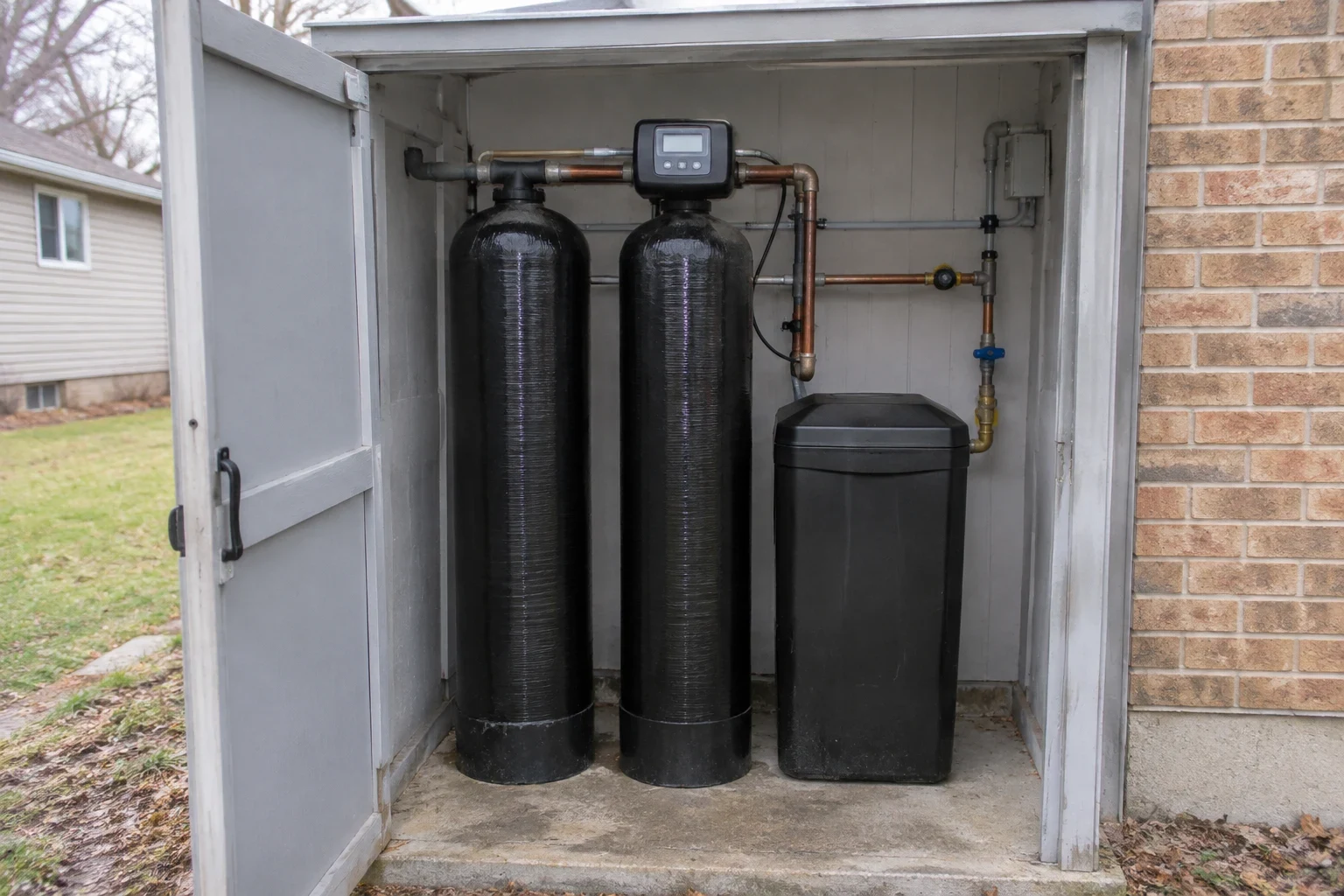
Get your quote by phone
Tell us how many bathrooms you have and where your main line comes in, and we can talk through sizing and price. We serve Port Washington, Grafton, Cedarburg and the towns around them.