ServicesWater Softeners
Water Softener Installation in Port Washington
Calcium and magnesium in hard water crust over heating elements, clog faucet aerators and leave a gray film on glass. We match a softener's grain capacity to your hardness and household, connect it with a bypass and proper drain, and leave your utility room as tidy as we found it.
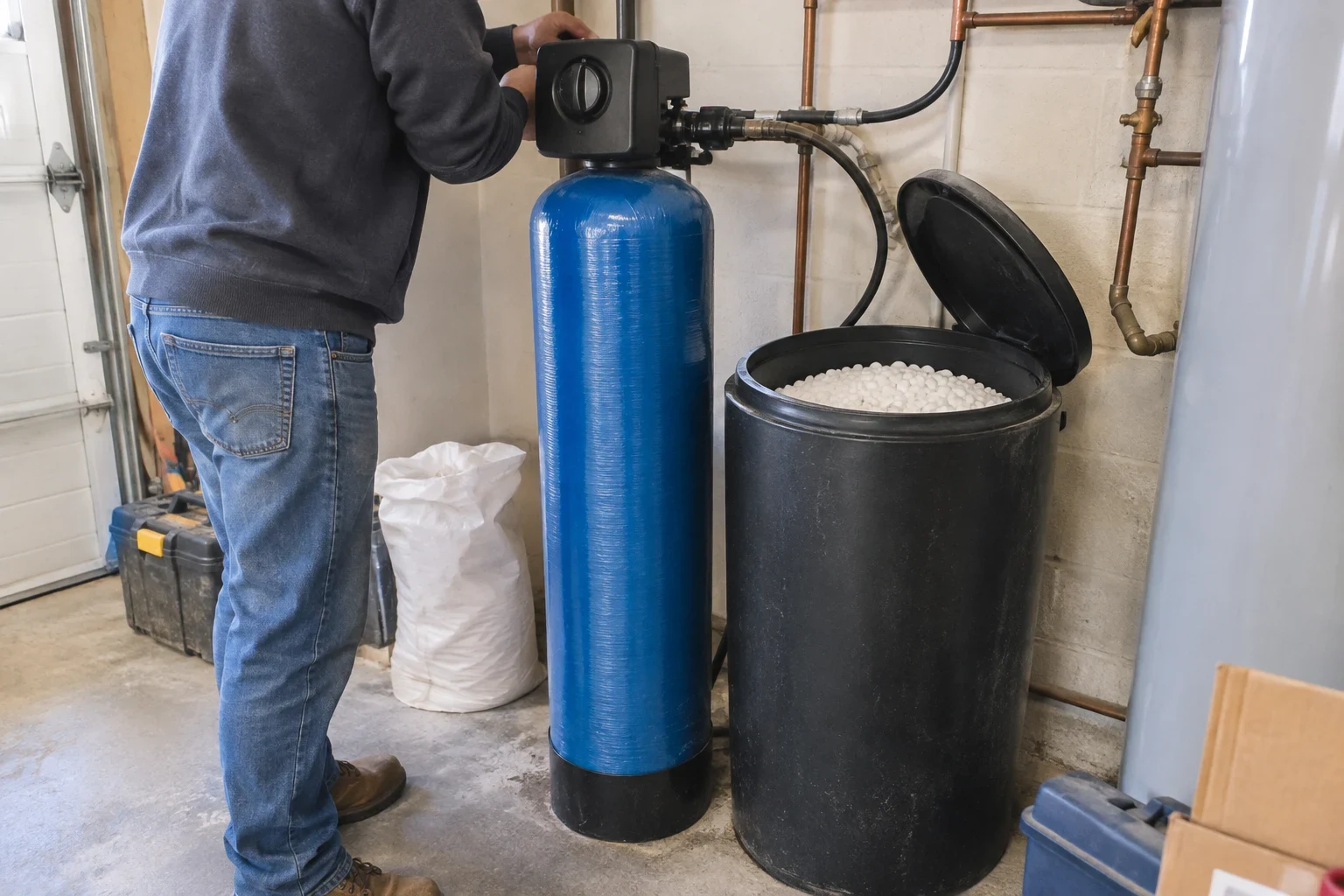
How ion exchange takes out hardness
Inside a softener's resin tank are thousands of small plastic beads charged with sodium. As water flows through, calcium and magnesium cling to the beads and sodium is let go in exchange. Once the beads are saturated with hardness minerals, the control valve flushes them with salty brine from the second tank, which strips the minerals off and sends them to the drain so the resin is ready again.
Softening earns its cost when hardness is high enough to do measurable harm, like scale on water heater elements, plugged aerators and fixtures that wear out early. When the hardness number is modest, we say so and steer you toward something that solves your actual complaint, such as whole-home filtration for chlorine taste. Private wells around Port Washington often carry iron too, and in those homes a softener usually works alongside well water treatment.
What comes with every softener install
- Capacity set by your figures
- We start from the hardness listed in your utility's water quality report or your latest well results, then factor in how many people live in your home. Those two numbers decide the resin tank's grain capacity, so it regenerates every few days rather than nightly.
- Demand-based control valve
- A built-in meter tracks the gallons you use and starts regeneration once the resin nears capacity. Salt and rinse water get used on real demand instead of on a clock.
- Bypass and connecting pipe
- Each system is fitted with a bypass, so the softener can be isolated for service while the rest of the house keeps running water. Where the piping layout allows, outdoor spigots stay on unsoftened water.
- Air-gapped drain line
- Brine and rinse water from regeneration run to a floor drain or standpipe and discharge through an air gap. The gap blocks any chance of drain water being pulled back into the system.
- Programming and first cycle
- We add salt to the brine tank, enter your hardness and preferred regeneration hour, and force a manual cycle to watch the valve move through backwash, brine draw and rinse.
- Removal and cleanup
- We carry out the old unit, pipe offcuts, spare fittings and all packaging. The floor around the new tanks gets vacuumed and wiped before we go.
Signs your home has a hardness problem
Chalky buildup on fixtures
Calcium carbonate collects on aerators, showerheads and glass shower doors. Scrub it away and it is back within the week.
Spots and haze on dishes
As water evaporates it leaves its minerals behind as spots. Hardness also ties up detergent, so glasses come out of the dishwasher dull.
Popping from the water heater
Scale settles at the bottom of a tank heater, trapping water against the burner or crusting an electric element. You hear rumbling, and hot water takes longer to come back.
Soap that turns to scum
Calcium and magnesium bind with soap and form curds rather than lather. You reach for more shampoo, and your skin feels coated after rinsing.
A worn-out existing softener
Resin degrades over the years, faster if it sees chlorine or iron. When spots and scale return while the brine tank is still full of salt, the resin bed or control valve has likely reached the end of its life.
What sets the price of a softener install
The equipment and the plumbing differ from one house to the next, so every quote is built from scratch. Each piece of the job gets its own line, which lets you see exactly what you are paying for. Financing is available through U.S. Bank Avvance, on approved credit.
Grain load from hardness and people
The harder the water and the more people using it, the more grains the resin has to pull out each day. Carrying that load calls for more resin volume and a larger salt reservoir, and both raise the equipment cost.
Metered versus timer valve
A valve with a flow meter carries a higher upfront cost than a simple clock timer. Because it regenerates only on actual use, it tends to recover that difference through lower salt and water consumption.
Iron and other dissolved minerals
Iron coats ordinary resin and cuts its capacity. When a well carries iron, the softener may need a specialty resin or a dedicated filter installed ahead of it.
Piping already in place
Plenty of newer houses come with a softener loop roughed in near the water heater. In an older house we may need to run new pipe to split softened and outdoor lines and add a drain connection, which adds labor and material.
How install day runs
- 1
A conversation by phone
On the call we go over your hardness figure, how many people live in your home and where your main line comes in. You leave with a free quote that stays good for 30 days.
- 2
Covering floors and catching water
Before any tools come in, we lay protective runners along the path from your entry to the utility area. Catch pans go under the pipe before the first cut, and water drained from the lines is collected in buckets so none of it reaches your floor.
- 3
Plumbing in the softener
With the main valve closed, we install the bypass, connect the resin tank and route the drain line to its air gap. All work is done by a licensed Wisconsin plumber and meets plumbing code.
- 4
Startup and walkthrough
We turn the water back on, bleed air from the pipes, add salt and run a test regeneration. You then see how the bypass works, how often to check the salt and what the valve display is telling you.
- 5
Clean area, then payment
Cleanup is finished and the old equipment is loaded out before we talk about payment. Full payment is due at the completion of the install.
Common questions about water softeners
Will softened water taste salty?
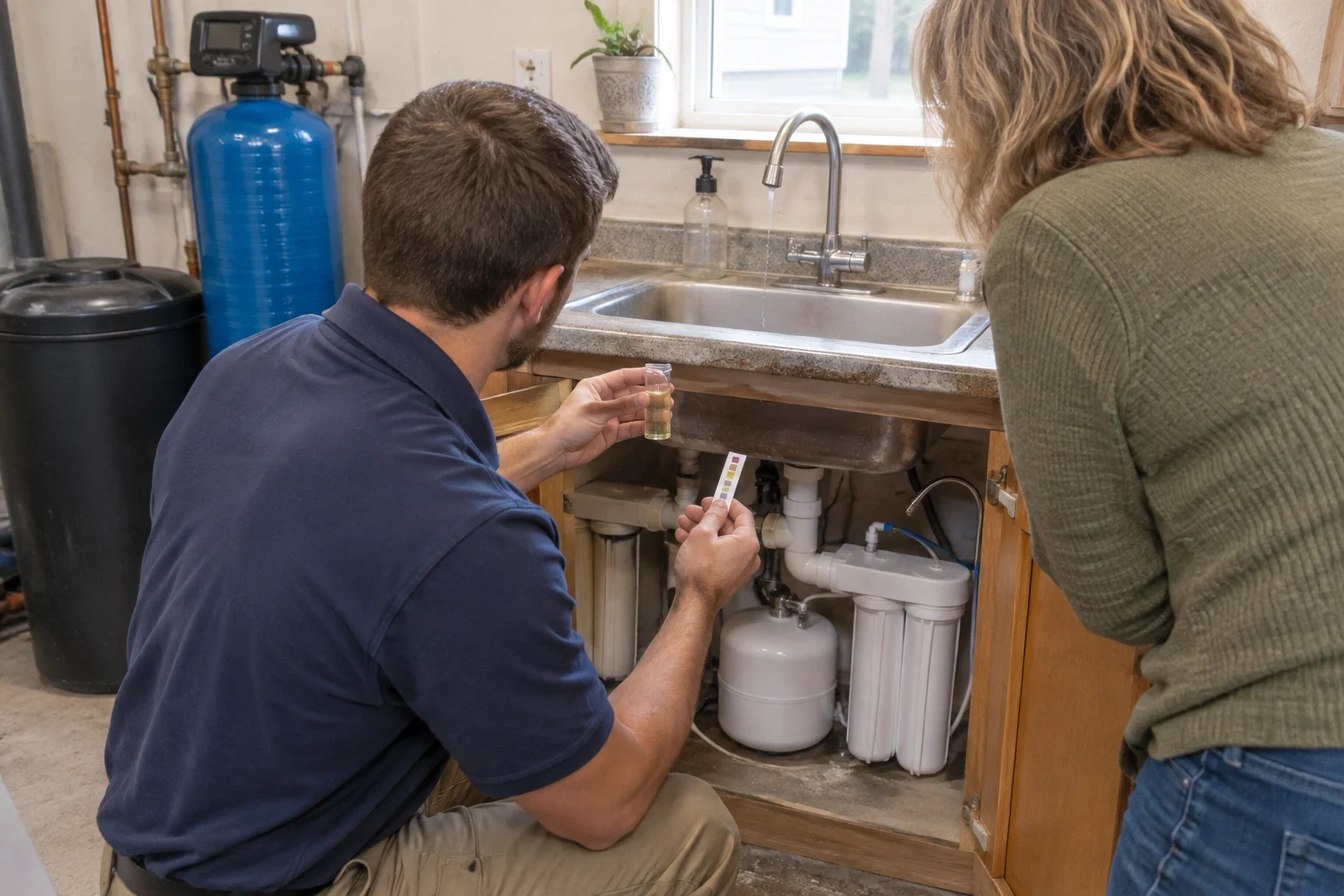
The sodium a softener adds tracks with how hard the water was going in, and most people never notice it. If you would rather drink water without it, a reverse osmosis system under the kitchen sink strips it out. Our RO units carry a warranty of 1 year on the RO unit, filters excluded.
How often will I add salt?
Three things set the pace: the hardness of your water, the gallons your household runs each day and the type of control valve. A metered valve regenerates only once the resin is close to full, so each bag stretches further. At startup we show you how to check the salt level and what a healthy brine tank looks like inside.
Is there a warranty on the install?
Yes. You get a 1 year labor warranty on the original install. If one of our connections leaks or fails during that year, we return and correct it.
Do I have to pay before the work is done?
No. Full payment is due at the completion of the install, after you have watched the system run. Financing through U.S. Bank Avvance is available on approved credit if you would rather spread the cost out.
What if I change my mind after signing?
Once you sign, there are three business days to cancel. Before that, your quote holds for 30 days, so you can take time to compare and decide without pressure.
Will the install make a mess in my basement?
We lay covers along the route and under the work area, and drained pipe water goes into buckets. When the system is running we vacuum and wipe the floor. The old unit and every box and scrap of pipe go out with us.
Talk through your softener options
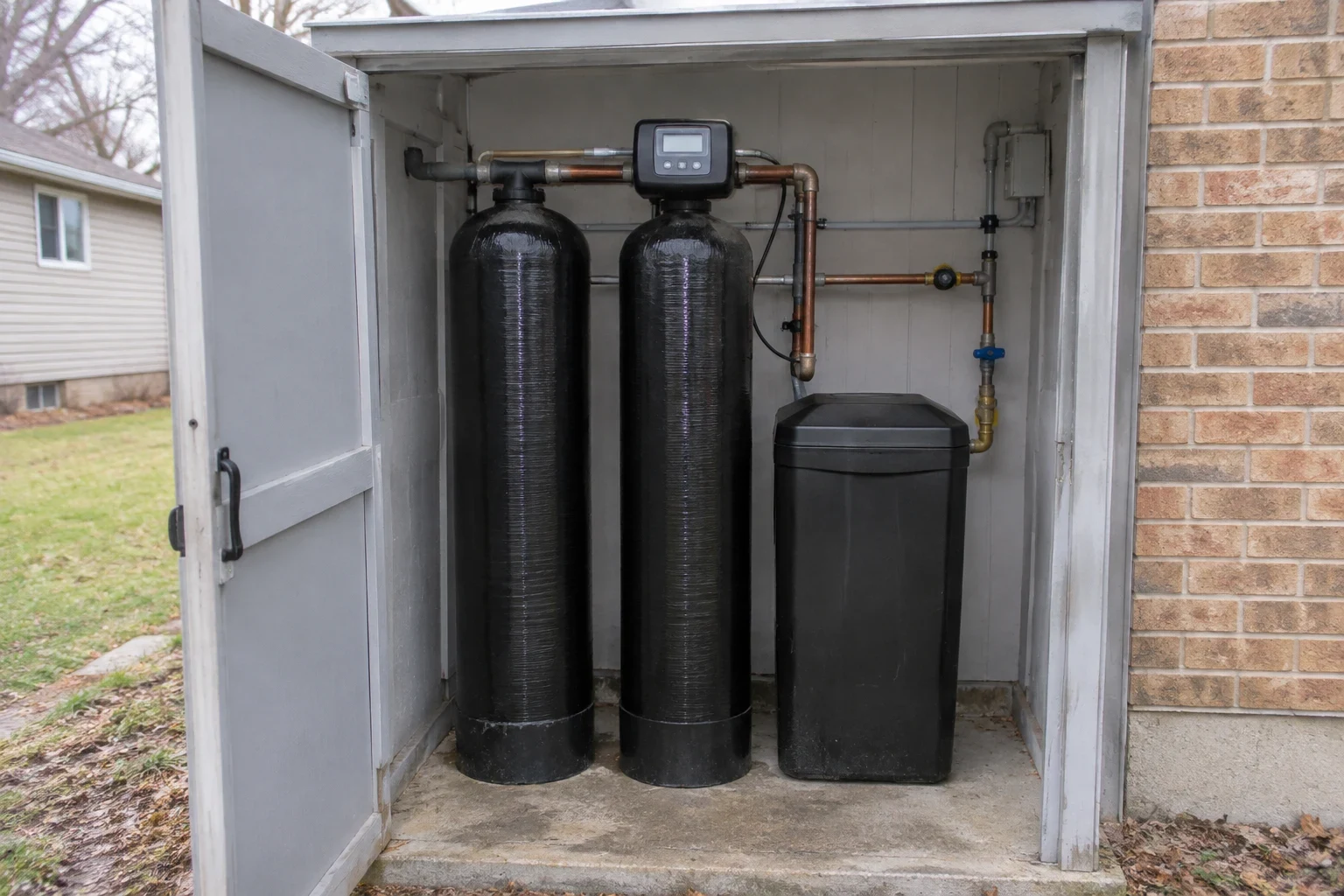
Tell us your hardness number and how your water line is set up. We will give you a straight answer on sizing and explain how financing works, including for homes in Grafton, Saukville and Cedarburg.