ServicesWell Water Treatment
Well Water Treatment in Port Washington
We build a treatment train for your private well that targets what you actually see and smell: orange stains, rotten-egg odor, grit in the aerators or scale on fixtures. Each stage is sized to your pump's flow, and we leave the utility room cleaner than we found it.
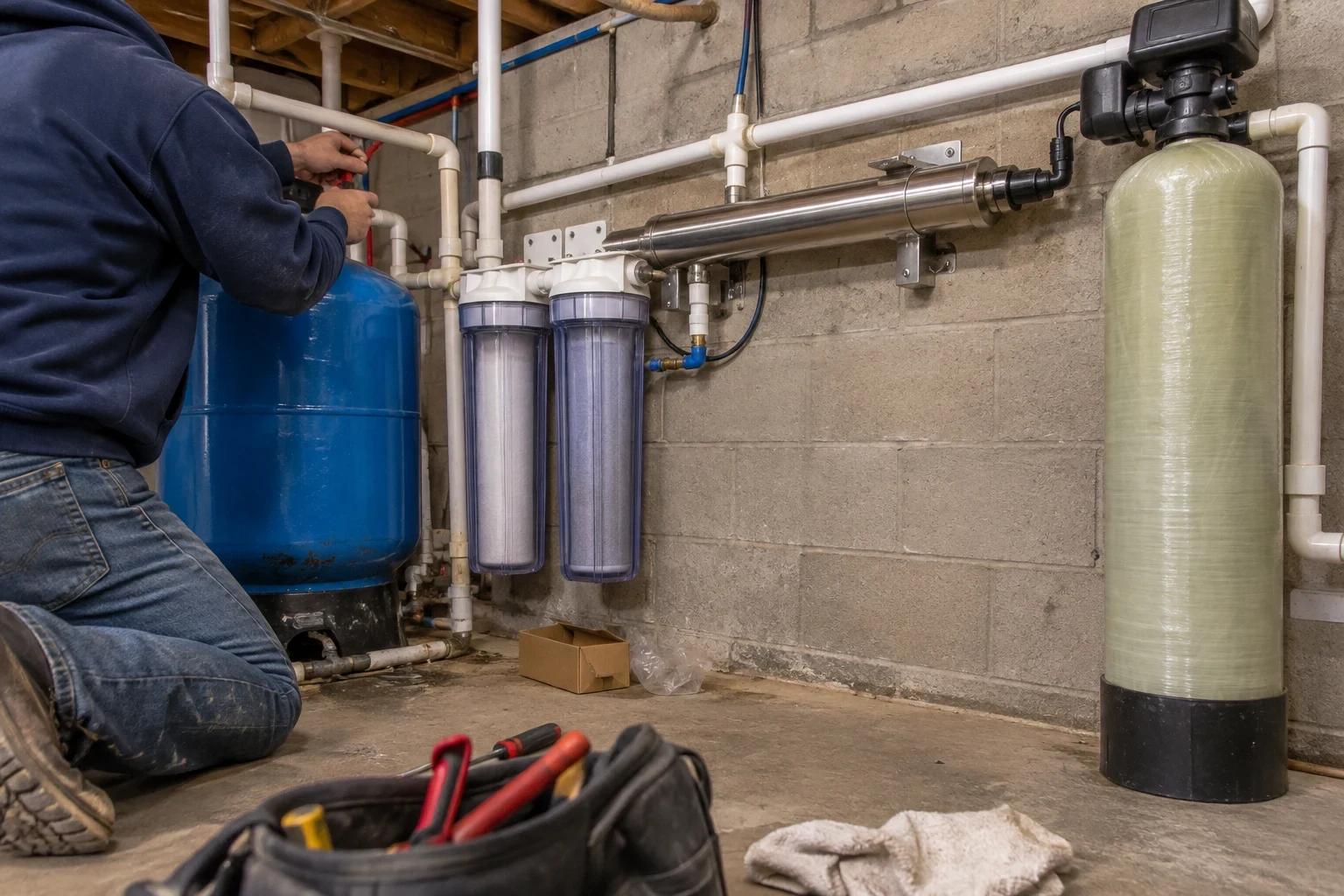
Treatment built around how your well behaves
Water from a private well travels from the aquifer to your pressure tank with nothing treating it along the way. Dissolved iron, manganese, hydrogen sulfide gas, hardness minerals and fine sand all arrive in your plumbing as they came out of the ground. Iron is usually the first one you notice: it pours clear from the faucet, then oxidizes in the toilet tank or dishwasher and leaves an orange-brown stain.
One tank cannot handle all of that, so we plumb equipment in a deliberate sequence. Sediment comes out first so grit never reaches the media beds further down. Iron and sulfur filtration follows, ahead of any softener, because heavy iron coats softener resin and shortens its service life. UV or a drinking water system goes last as a polishing step. If a lab has analyzed your well recently, have those numbers handy when you phone and we will size each stage from them.
Stages we can build into your well system
- Sediment filter
- Right after the pressure tank, a spin-down screen or cartridge filter catches sand and loose flakes of scale. Keeping that grit out protects every valve and control head farther down the line.
- Air-injection iron and sulfur filter
- An air pocket held at the top of the tank turns dissolved iron and hydrogen sulfide into solid particles, and the media bed traps them. On a timer, the tank backwashes those particles to the drain, so there are no chemicals for you to handle.
- Water softener
- Once the iron is gone, a softener strips out the calcium and magnesium that scale your water heater and leave spots on glasses. We size the resin to your hardness and how much water your family uses, so salt use stays reasonable. Sizing is covered in more depth on our Water Softeners page.
- UV disinfection
- Water flows through a stainless chamber past a UV lamp and picks up nothing along the way. We put it near the end of the train because iron or cloudy water would shade the lamp.
- Under-sink drinking water
- Many well owners add a reverse osmosis unit at the kitchen sink for drinking and cooking. The RO unit carries a 1 year warranty, with filters excluded. Our Reverse Osmosis page has the details.
When your well water needs attention
Rust stains in the bathroom and laundry
Orange or brown rings in toilet bowls, tubs and on white clothes mean dissolved iron is oxidizing once it hits air or bleach.
Sulfur odor from the taps
Hydrogen sulfide gas smells like rotten eggs and is often worst on the hot side. Over time it darkens silver and copper fittings too.
Dark specks or a gray film
Manganese acts much like iron but leaves black or gray residue that clings to fixtures and resists scrubbing.
Sand in faucet screens
Grit that plugs aerators and appliance inlet valves tells you sediment is making it past the pump.
Scale and a noisy water heater
Chalky white buildup on showerheads, or a water heater that pops and rumbles while heating, points to hard water.
What sets the price of a well system
Every private well brings up its own blend of minerals and dissolved gas, so treatment for a well ranges more widely in cost than equipment for city water. Your quote is written stage by stage, and each line shows what that tank or housing removes and what it costs. The quoted prices hold for 30 days. If you sign and then have second thoughts, you can cancel within three business days.
Number of treatment stages
A sediment housing paired with a softener costs less than a full train with iron removal and UV added. Your quote covers only the stages your symptoms point to.
How much iron and sulfur is present
Higher iron levels or a stronger rotten-egg smell take more filter media and longer backwash cycles. That calls for a bigger tank and a larger control valve.
Pump output
Each stage has to pass your peak flow without dropping pressure. A high-capacity pump can push the whole train up to larger valves and tanks.
Space, drain and power
A cramped spot beside the pressure tank, a long run to the nearest floor drain, or no outlet for a control head or UV lamp means more fittings, wiring and labor.
How install day runs
- 1
Phone quote, then a look at your well setup
We go over your symptoms and the space around the pressure tank. We record pump flow, pipe size and the location of a drain and an outlet, since backwashing filters rely on both.
- 2
Cover the route and the work area
Before any tools come in, we lay floor protection from your entry to the equipment area and put on shoe covers. Water is shut off at the tank, and the lines empty into buckets so nothing spills on your floor.
- 3
Plumb each stage in sequence
Every tank gets its own bypass valve, so one stage can be serviced while the rest of the house keeps water. Drain lines are run with a proper air gap. A licensed Wisconsin plumber does the installation.
- 4
Fill, flush and set the controls
Tanks fill slowly to push out trapped air, then we run the first backwash, program regeneration times and check every joint for drips. We show you the bypass valves and explain what each stage will need over the years.
- 5
Pack out and clean up
Boxes, media bags and old fittings go out with us. We wipe the equipment, vacuum the floor and pick up the floor protection on the way out. Labor on your original install carries a 1 year warranty.
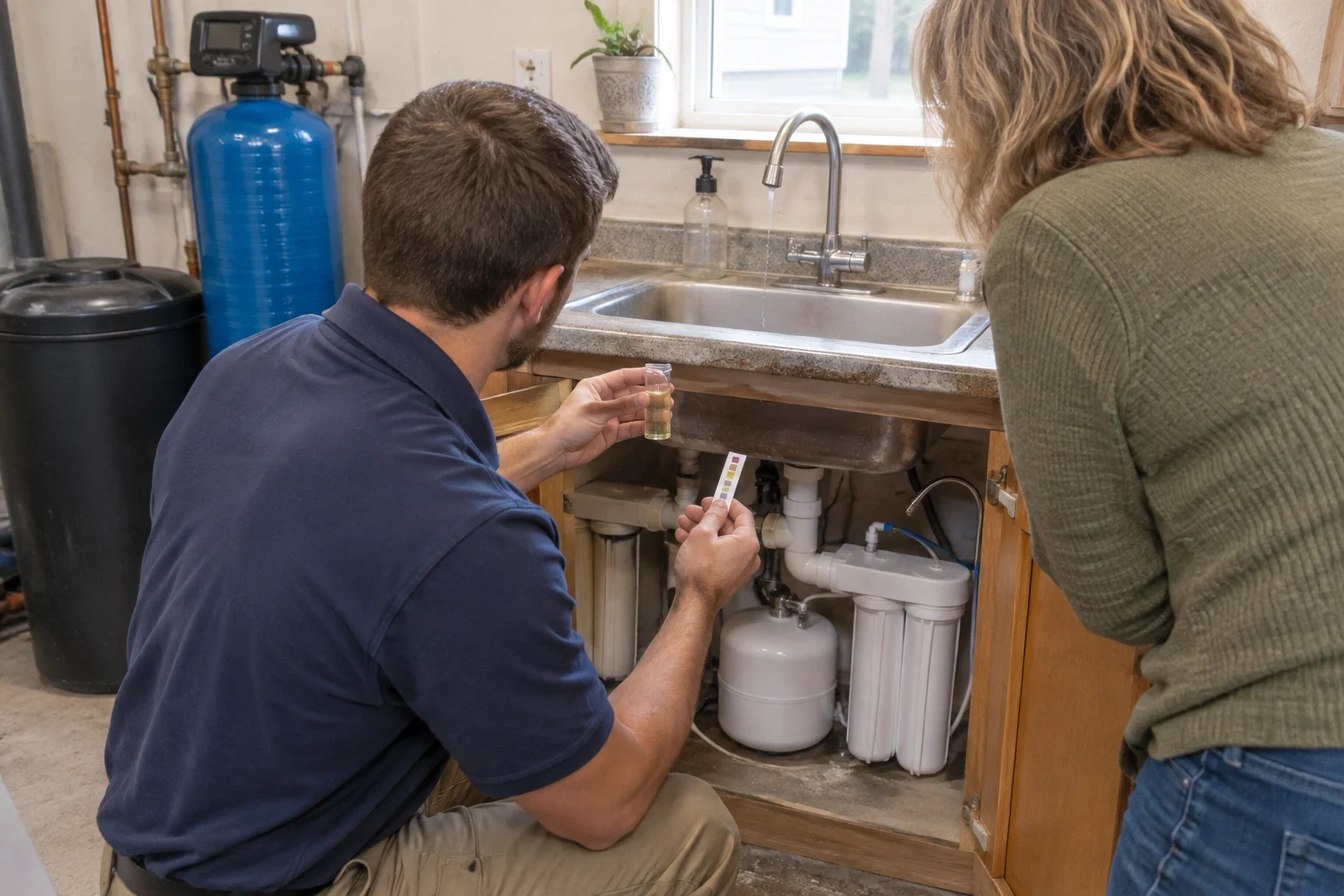
Well water treatment questions
Can a softener handle my iron by itself?
Only when iron is low. At higher levels, iron oxidizes inside the resin tank, coats the beads and keeps shrinking the softener's capacity. Putting a dedicated iron filter in front protects the resin and gives you clearer water. We will tell you plainly whether your well calls for one unit or both.
Will treatment equipment cut my water pressure?
Not when it is sized right. We match valve port sizes and tank diameters to the flow your pump delivers, so showers and appliances run the way they did before. When people complain about pressure after an install, the cause is nearly always equipment that was too small.
How much disruption should I expect on install day?
Expect your water to be off for part of the day while the stages are plumbed in and started. The floor is covered from the door to the equipment, lines drain into buckets, and every carton and old fitting goes out with us when we leave.
What upkeep does a well system need?
Change the sediment cartridge once you notice pressure falling off. The UV lamp is replaced on a fixed schedule, and the softener brine tank needs salt. The air-injection iron filter backwashes itself, and we show you how to confirm it is cycling.
When do I pay, and is financing offered?
Payment in full is due when the install is finished, not before. To spread the cost over time, we offer financing through U.S. Bank Avvance, on approved credit. On the phone we can walk you through how that application works.
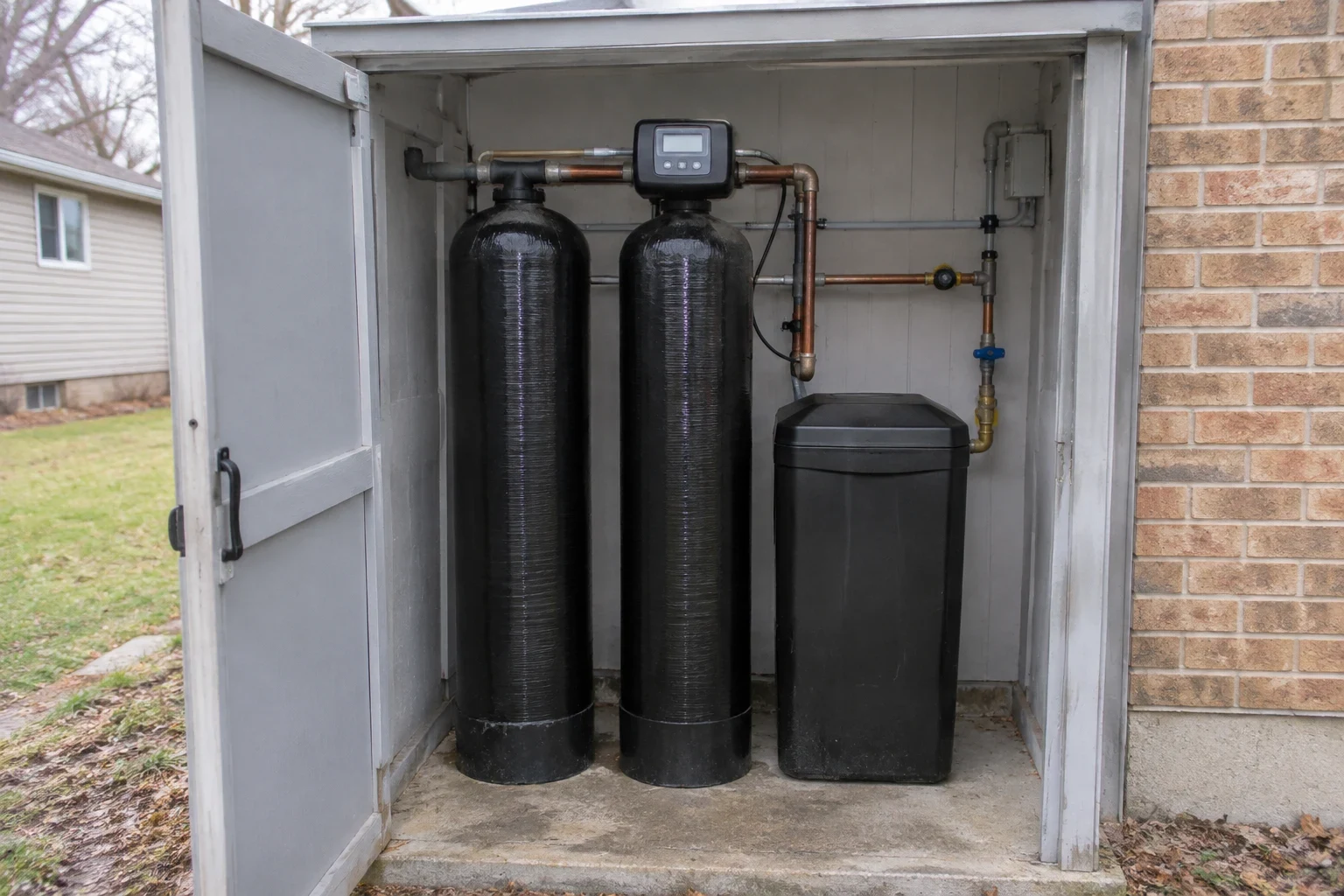
Treated well water and a utility room left clean
Describe the stains, smells or grit you are living with, and we will lay out which stages fit your well and how financing works. We serve well owners in Port Washington, Saukville, Belgium and the area around them.