ServicesReverse Osmosis
Reverse Osmosis Systems in Port Washington
Our under-sink reverse osmosis setups run kitchen water through a sediment prefilter, a carbon block and a thin-film membrane before it reaches a faucet of its own. A licensed Wisconsin plumber makes every connection, and your cabinet is left clean and restocked.
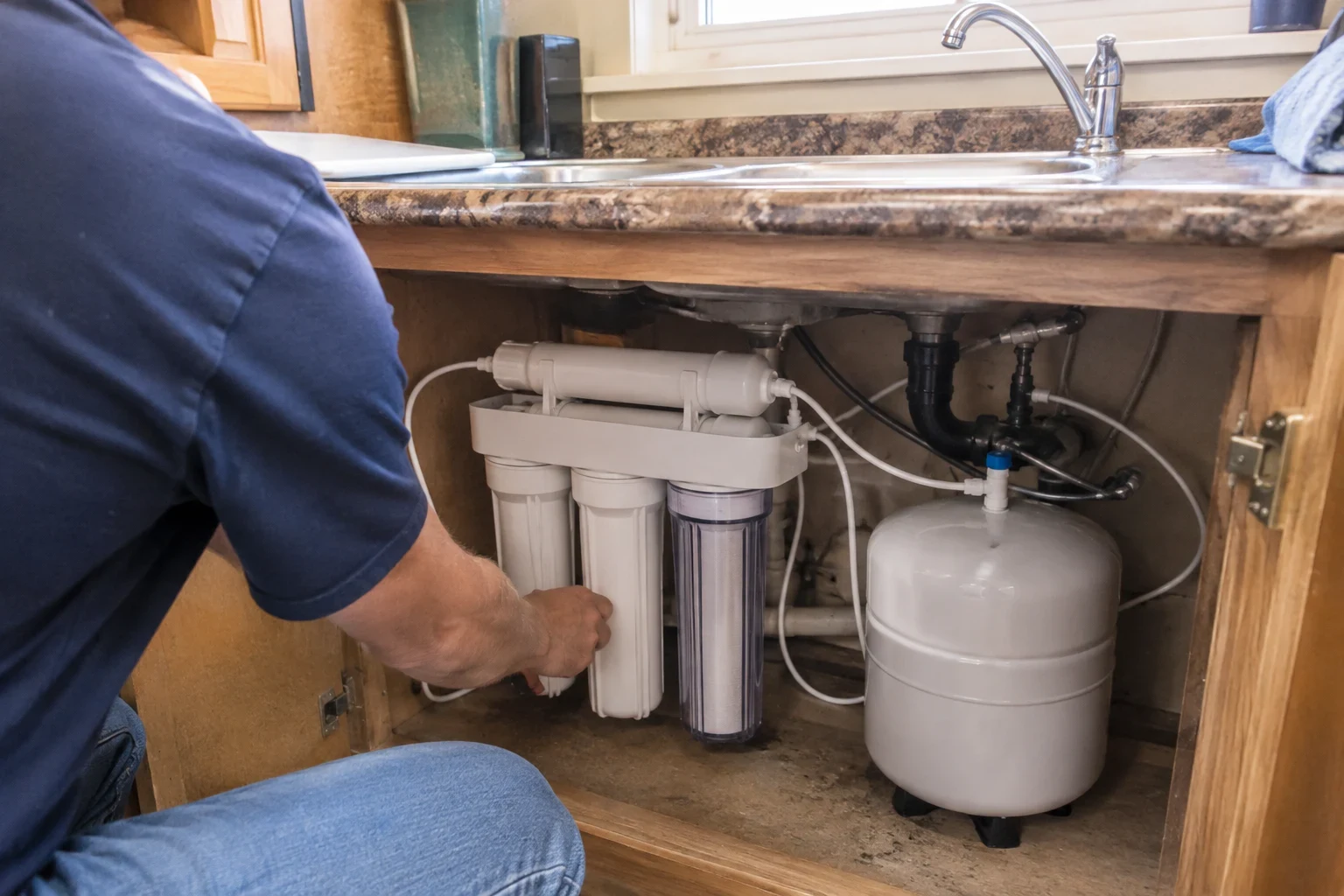
What an RO system does and when it makes sense
Reverse osmosis forces water through a semi-permeable membrane with pores fine enough to hold back most dissolved solids, including lead, nitrate, sodium and many trace metals. The treated water, called permeate, collects in a small pressurized tank under the sink, and the rejected solids are flushed to the drain. Because it serves a single tap, RO covers drinking and cooking water while showers and laundry stay on the regular supply.
It is the right call when you want better-tasting drinking water, when older plumbing has you thinking about lead at the tap, or when a softener is adding sodium you would rather not drink. If the complaint is chlorine smell in the shower or sediment throughout the house, whole-home filtration fits better, and the two often run together.
On a private well, iron and hardness can foul a membrane within months. In that case we look at well water treatment first and place the RO after it, so the membrane only sees water it can handle.
What comes with an RO install
Pretreatment, membrane and polishing filter
A sediment prefilter catches sand and pipe scale. A carbon block removes chlorine, which would otherwise break down the thin-film membrane. After the membrane, a carbon postfilter polishes taste on the way to the faucet.
Dedicated faucet and code-compliant drain
We mount the faucet in an unused sprayer or soap hole, or drill the sink deck or countertop. The reject line ties into the drain with a saddle above the trap, with the air gap or backflow protection the plumbing code calls for.
Storage tank and automatic shutoff
The tank is sized to fit your cabinet and your household's use. An automatic shutoff valve and check valve stop production once the tank is full, so the system is not sending water to drain all day.
Refrigerator or ice maker line, if you want it
We can run tubing from the RO to your fridge so ice and chilled water come from the same treated supply.
A clean cabinet when we leave
We empty the cabinet onto a drop cloth, set towels under every fitting, and vacuum drill dust as we go. Your cleaning supplies go back in, the packaging leaves with us, and every joint is checked dry before we pack up.
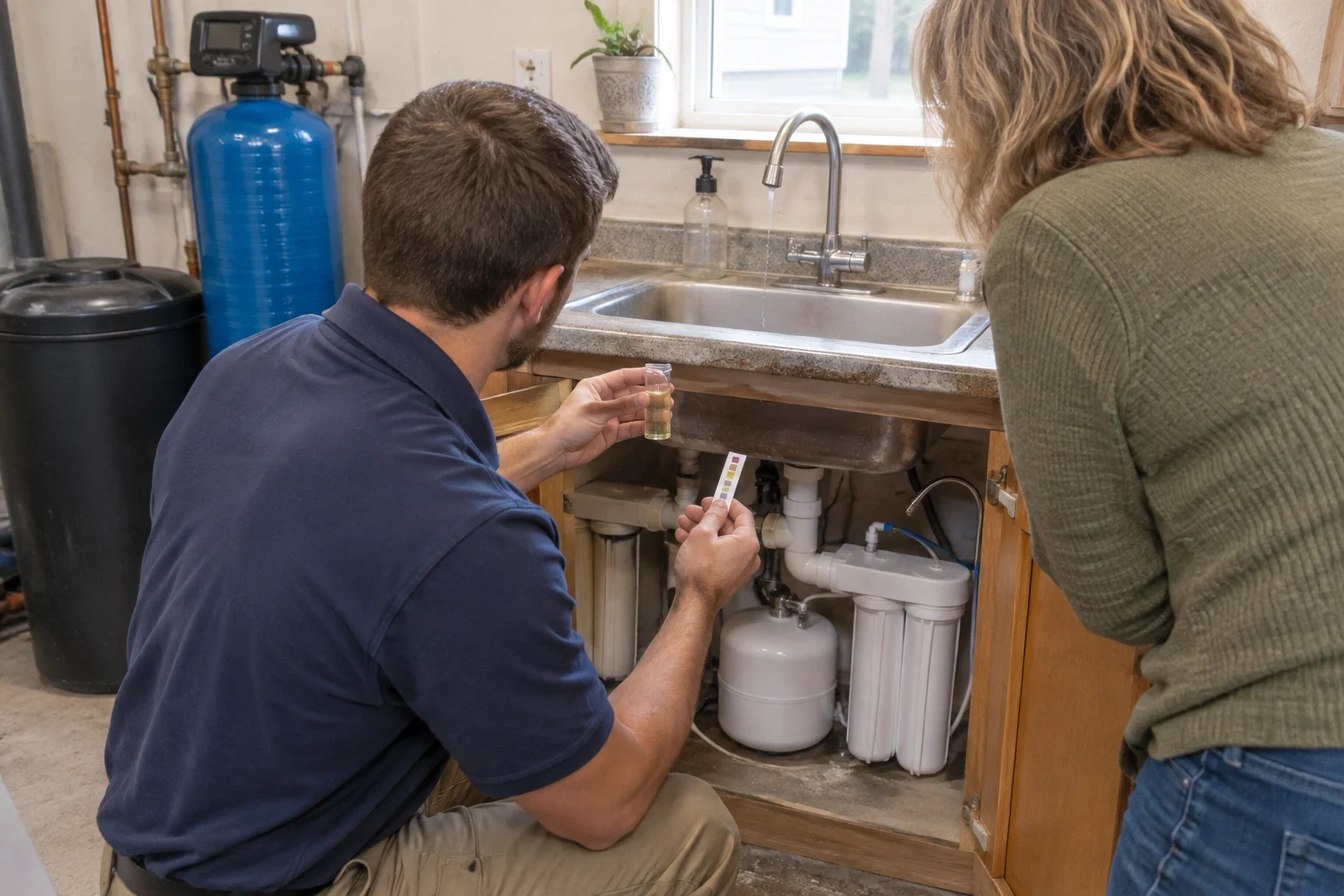
Signs an RO system belongs under your sink
- Water tastes flat, salty or metallic
- High dissolved solids or sodium change how water tastes, and so does coffee made with it. An RO membrane removes most of what causes that.
- You buy bottled water by the case
- If the grocery cart always has a case of water in it, a faucet that delivers the same thing is cheaper over a few years and keeps plastic out of your recycling bin.
- Older supply lines or solder
- Homes plumbed before the 1986 federal lead solder ban can have lead in joints and older brass fixtures. RO is one of the few point-of-use methods rated to reduce lead at the tap.
- Softened water at the kitchen tap
- A softener trades hardness for sodium. An RO at the kitchen sink lets you keep soft water for the house while drinking water without the added salt.
- Your current RO is slow or runs out fast
- A trickle at the faucet usually means a fouled membrane or clogged prefilters. A tank that empties after one glass often has lost its air charge. We can service it or replace it.
How the install goes
- 1
A phone call and a free quote
We ask about your sink and countertop, your water source (city supply or a private well) and any fridge line you want. You get a written quote good for 30 days, plus financing information if it helps.
- 2
Pressure check and floor protection
On install day we lay drop cloths from the door to the sink and check incoming water pressure. Membranes need steady pressure to produce well, so a low reading means we add a permeate pump or booster before anything else.
- 3
Mounting, connections and flush
We tap the cold line with a feed adapter and shutoff, set the drain saddle, mount the filter manifold and tank, and run the faucet line. The first tank is flushed to drain to clear carbon fines and membrane preservative.
- 4
Walkthrough and cleanup
We show you the filter housings, the shutoff and the change schedule. Then we wipe down the cabinet, vacuum, put your things back and carry out every box. Payment is due in full once the install is complete.
What moves the price of an RO system
Most of the cost is the equipment itself and the work of fitting it into your kitchen. After we talk through your setup, we price the job line by line. You see where each dollar goes before you agree to anything.
- System design
- A standard setup with four or five filtration stages is the most economical choice. Each upgrade, such as a remineralization cartridge, a UV lamp or a tankless high-flow unit, adds to the total.
- Countertop and faucet hole
- An existing sprayer hole makes for a simple faucet mount. Quartz or granite needs a diamond core bit and more time at the sink.
- Water pressure and supply
- Low incoming pressure may call for a booster or permeate pump. Well water may need pretreatment upstream so the membrane lasts.
- Extra runs
- Tubing to the refrigerator, a tank mounted in the basement or a second faucet at a wet bar each add material and labor.
Reverse osmosis questions
- How often do the filters and membrane need changing?
- Sediment and carbon prefilters typically last six to twelve months. The membrane usually goes two to three years, and longer when the prefilters are changed on schedule. A slower fill or a change in taste is the usual sign it is time.
- Does an RO system waste water?
- Yes, some water goes to drain carrying the rejected solids. The amount depends on pressure, water temperature and the membrane. A permeate pump and a working shutoff valve reduce it noticeably.
- Does RO strip out minerals I need?
- It removes most calcium and magnesium along with everything else. Most people get those minerals from food rather than water. If you like the taste of mineralized water, we can add a remineralization stage after the membrane.
- What warranty comes with the install?
- The RO unit itself is covered for one year, with filters excluded because they wear out with use. Our labor on the original install also carries a one-year warranty.
- Can I finance the system?
- Financing is available through U.S. Bank Avvance, on approved credit. If you would rather pay outright, full payment is due when the install is complete. Your quote holds for 30 days. After signing the agreement, there are three business days to cancel if you change your mind.
Clean drinking water from its own faucet
Give us a few details on your kitchen sink and your water source. From there we can explain which system fits, what it costs and how financing works. We serve Port Washington and nearby towns like Grafton and Saukville.